

Format: In-person
Audience: Undergraduate engineering students, working professionals
Prerequisites: Basic electrical engineering and automotive systems
Learning Outcomes:
•Understand the components and working principles of hybrid and electric vehicles
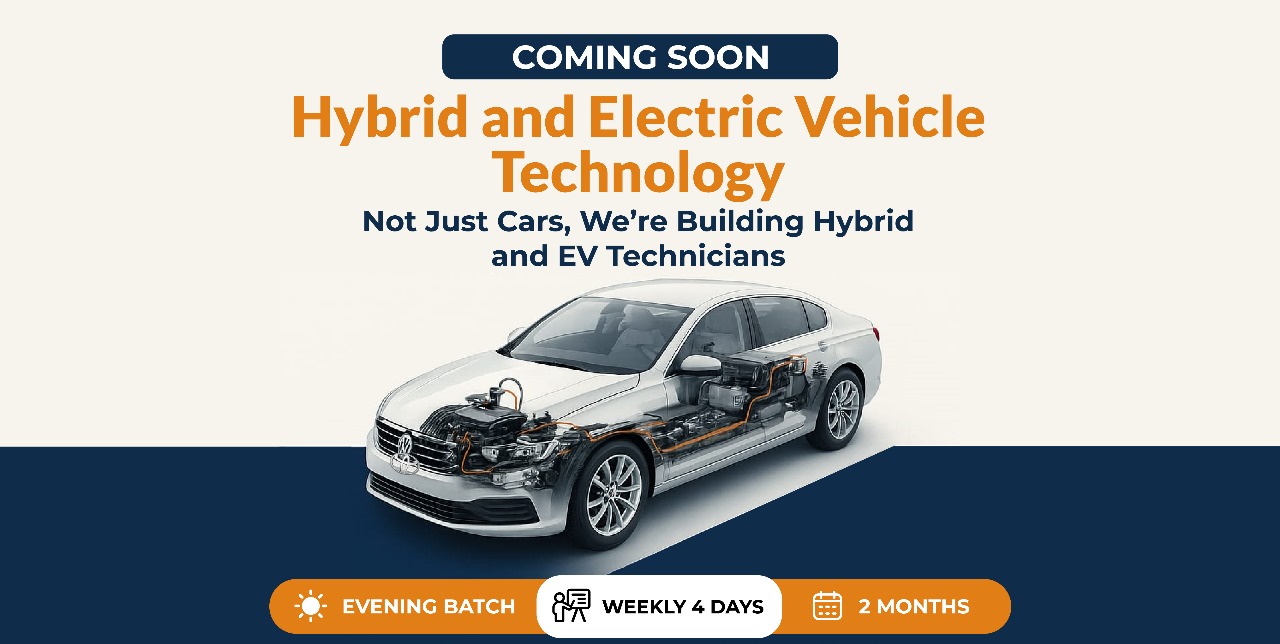
The Hybrid & Electric Vehicle Engineering course is an intensive, industry-focused training program designed for engineering students, technicians, and automotive professionals looking to build strong expertise in modern electrified vehicle systems. Delivered in an immersive in-person format, this two-month program blends foundational theory with hands-on workshop practice to develop job-ready skills in hybrid and electric vehicle diagnostics, servicing, and safety procedures.
Participants will explore the architecture and operation of Hybrid Electric Vehicles (HEVs), Plug-in Hybrid Electric Vehicles (PHEVs), and Battery Electric Vehicles (BEVs). The curriculum covers essential systems including high-voltage batteries, electric motors, power electronics (inverters and converters), regenerative braking, energy management, and vehicle control strategies. Through real-vehicle components, guided demonstrations, and fault-finding exercises based on industrial service standards (such as Toyota Hybrid Systems), learners gain practical experience in identifying faults and performing accurate diagnostic tests.
The course also emphasizes high-voltage safety, teaching participants how to perform insulation checks, isolation verification, and safe shutdown procedures while working on live EV systems.
By the end of the program, learners will be able to:
Understand the construction and working principles of hybrid and electric vehicle powertrains
Identify, describe, and evaluate major EV/HEV components
Perform diagnostic measurements and testing procedures using automotive tools and equipment
Troubleshoot common issues in batteries, motors, inverters, and control systems
Apply industry-standard safety protocols when working with high-voltage systems
This course prepares participants for roles in EV service centers, hybrid/EV maintenance workshops, automotive diagnostics, and technical training environments, equipping them with the knowledge and confidence needed to work effectively with the next generation of automotive technology.